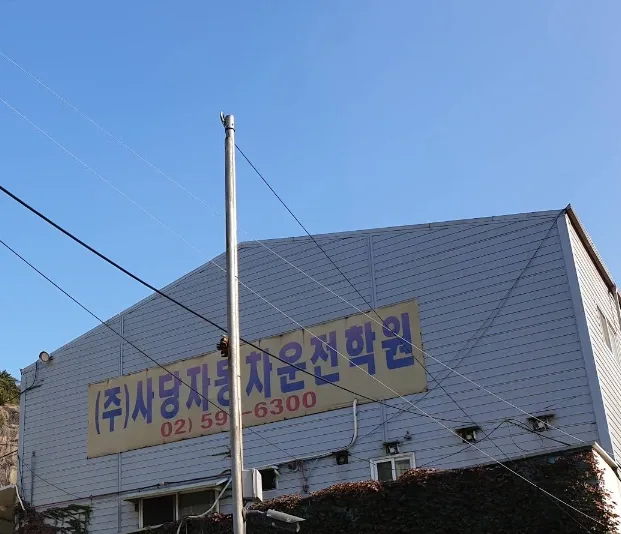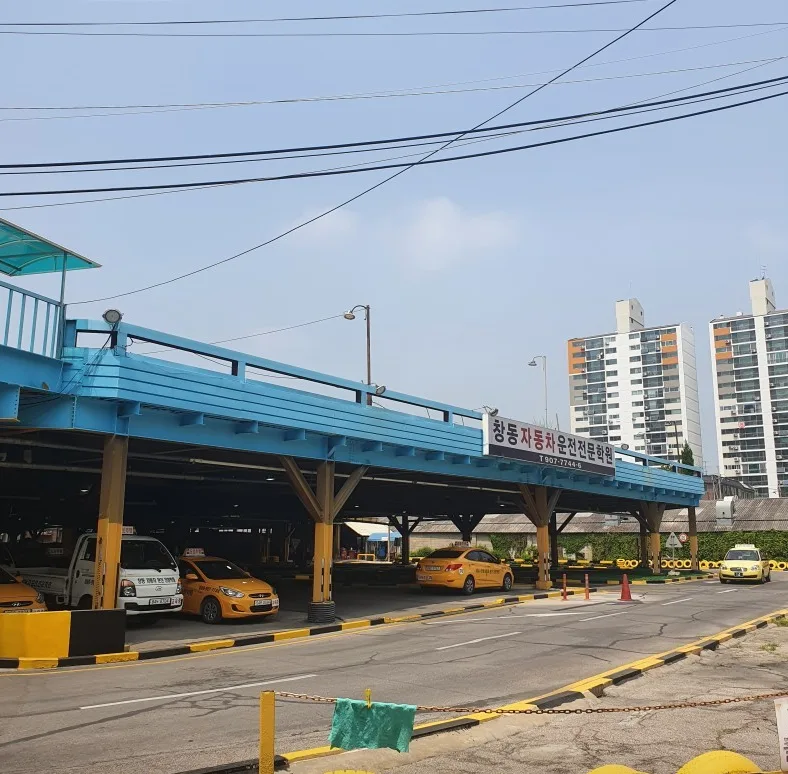
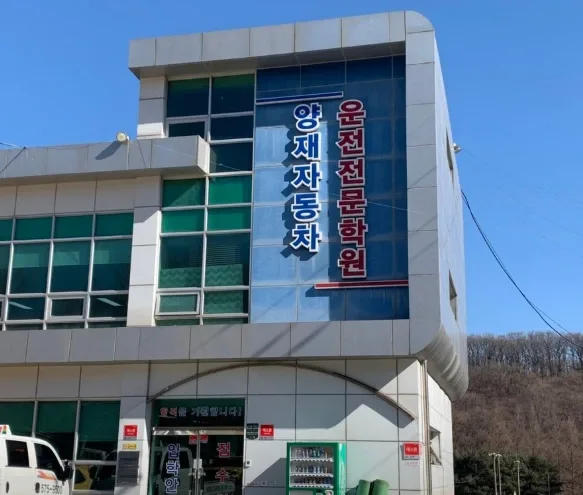
Yangjae Automobile Driving Academy Review Summary
I enrolled in the Class 1 automatic license course in mid-May 2026 and attended the academy until mid-June, so the full process took about one month. I completed three hours of classroom education, four hours of closed-course training, and six hours of on-road training. I passed the closed-course test on my first attempt but failed my first road test and passed on my second attempt. My initial payment was KRW 896,800, including KRW 48,000 for classroom education, KRW 292,000 for closed-course training, KRW 438,000 for on-road training, KRW 50,000 for the closed-course test, KRW 55,000 for the road test, and KRW 13,800 for insurance. I paid an additional KRW 55,000 for the road-test retake, bringing the final amount paid to the academy to KRW 951,800. The facilities were generally clean, the shuttle was useful, and most instructors gave practical advice for passing the tests. However, the instructors varied considerably in their teaching style and attitude, and it was not always easy to reserve lessons and tests at my preferred times. The roads around Yangjae were also busy and demanding. My overall rating is about 4 out of 5.
Registration and Fees at Yangjae Automobile Driving Academy
Online Application and In-Person Registration
I submitted an online application first and then visited the academy to complete my registration. I went on a weekday afternoon and waited for about ten minutes while another student was receiving a consultation. Once it was my turn, the staff checked my identification, explained the available license courses, and went over the required class hours and tests. I was deciding between a Class 1 automatic license and a Class 2 automatic license, and the explanation helped me choose the Class 1 automatic course. I paid the full initial amount of KRW 896,800 by card at the academy. After payment, the staff booked my classroom education, closed-course lessons, and road lessons in that order.
Lesson Reservations and Test Booking
Scheduling required more attention than registration. Weekday evenings and weekends filled up quickly, and it was difficult to place the closed-course and road lessons close together. One staff member helped me find an alternative time when I needed to make a change, but another responded rather abruptly that there were no available places. The response was not particularly pleasant when I asked for my booking to be checked again. Test registration was completed at the front desk after I had finished the required training hours, and the test date and fee were explained clearly. Office workers should reserve as many lesson and test dates as possible on the day of registration.
Classroom Education and Facilities at Yangjae Automobile Driving Academy
Three-Hour Classroom Session
The classroom education lasted three hours and combined videos with an instructor’s explanation. There were enough seats for the number of students, and the screen was easy to see from my seat. Some topics, including safe following distances, right turns, traffic signs, and accident procedures, were useful for both the written test and actual driving. However, there were also periods when the instructor spent a long time discussing general driving experiences rather than test questions, which made parts of the class feel slow. Students preparing for the written test should use practice questions and mock tests in addition to attending the class. The air conditioning worked properly, and the room did not become uncomfortably warm or stuffy.
Lobby and Waiting Area
The first-floor lobby, reception area, classroom, and restroom were generally clean. There was no cigarette smell indoors, and the floors and chairs appeared well maintained. The waiting area was not particularly large, but seats were normally available. It became crowded when several students gathered before a test. Indoor noise was low, although I occasionally heard chickens outside the building. Before the test, a staff member explained the order of candidates and the assigned vehicles. Another staff member spoke to nervous students and helped them relax while they waited.
Training Vehicles at Yangjae Automobile Driving Academy
Driver’s Seat and Visibility
The Class 1 automatic vehicles I used did not have an unusually cramped driver’s seat. After adjusting the seat distance and height, I could reach the pedals comfortably and turn the steering wheel without hitting my legs. Raising the seat slightly gave me a clear view of the lane markings and the area in front of the vehicle. The side mirrors were also easy to check. At the start of each lesson, the instructor had me adjust the seat, backrest, and mirrors and explained how to avoid sitting too far from the pedals or too close to the steering wheel. When I rode in the rear seat during a test, the seat-belt instruction did not come immediately, so I checked and fastened it myself.
Steering, Accelerator, and Brake Response
Most vehicles had reasonably light steering, and the wheel returned properly after turns. The accelerator responded quickly enough that I had to use small ankle movements rather than pressing with my entire leg. The brake also responded fairly early, and the car lurched during my first few stops until I became used to it. One vehicle produced a squeaking sound when I pressed the brake, and its steering wheel did not return as smoothly as the others. The vehicle could still be driven, but the difference showed that vehicle condition was not identical across the fleet.
Cleanliness, Ventilation, and Air Conditioning
The interiors were reasonably clean for vehicles used by many students. I did not see heavy stains on the seats or steering wheel, and there was no strong cigarette smell. After a long lesson, a slight vehicle odor remained, so we opened the windows before departure or during a break. The air conditioning worked properly during my lessons in May and June. Road and tire noise entered the cabin, but it was not loud enough to prevent me from hearing the instructor.
Closed-Course Training at Yangjae Automobile Driving Academy
Two Sessions of Two Hours Each
My closed-course training consisted of two two-hour sessions. The first lesson covered pre-drive checks, gear selection, turn signals, the hill section, intersections, perpendicular parking, and emergency-stop procedures. The practice ground was large enough for several training vehicles to operate at the same time, and the course markings were visible. At busy times, however, I occasionally had to wait for the car ahead to leave a section. Perpendicular parking was taught by using fixed reference points for the entry position and steering timing. During the first lesson, receiving all of the instructions at once was difficult.
Different Teaching Styles
The first instructor explained the formulas and precautions quickly and then told me to drive the course. As a complete beginner, I found the pace demanding. The instructor also raised his voice after repeated mistakes and spent some time looking at his phone while I was practising, which made me uneasy about safety. The second instructor reviewed the points I kept missing, especially the entry angle for perpendicular parking and the timing of the turn signal. He also demonstrated how far to turn the wheel and how to correct the car if it crossed a line. The difference between the two lessons was substantial, even though the course content was the same.
Closed-Course Test
Before the test, the staff repeated the seat-belt requirement, mirror and seat checks, start signal, and time limit. The test vehicle handled similarly to the training vehicles, so it did not take long to adjust. I was nervous during the perpendicular-parking section, but I followed the sequence I had practised and passed on my first attempt. The result and deductions were available immediately, followed by instructions about the learner’s permit and road lessons.
Road Training at Yangjae Automobile Driving Academy
Courses A, B, C, and D
The road-training program covered courses A, B, C, and D. Roads near Yangjae Station had heavy car and bus traffic, and I often had to judge lane changes, U-turns, bus lanes, and intersection entries within a short distance. Construction had changed some lane markings, which made memorising the courses more difficult. The U-turn section on Course C and several lane changes on Courses A and B were particularly challenging. Parts of the academy’s videos did not match the current roads, so students should write the latest lane and turning instructions directly on the printed course map during lessons.
Lessons with Three Instructors
I completed three two-hour road lessons, each with a different instructor. One instructor carefully explained stopping distance, the use of bus lanes, right-turn checks, and the space to leave behind the vehicle ahead. He also repeated the Course C U-turn that I found difficult, which helped before the test. Another instructor told me to reduce speed without clearly explaining whether I should release the accelerator or apply the brake. His tone also became sharp when I asked questions. The instructors were not always consistent about when to use neutral gear or exactly when to begin a lane change, so I had to confirm which method matched the test standard.
Less Practice During Heavy Traffic
Each lesson was booked for two hours, but severe congestion around Yangjae made some courses take much longer than expected. During one lesson, I could not complete all four courses. Waiting before departure and changing drivers also reduced the time spent behind the wheel. Reviewing the course videos and intersection positions before class helped me use the limited lesson time more effectively. Rain or snow can make visibility and congestion worse, so booking lessons and tests on a clear day is advisable when possible.
First-Test Failure and Second-Test Pass
During my first road test, I had not fully memorised the course and became more nervous than expected. I lost points for the timing of a turn signal and for slowing near a stop line, and I failed. The examiner’s standard felt stricter than my training, and I was surprised to lose points for something that had not been strongly emphasised during lessons. I paid the additional KRW 55,000 test fee and marked every lane-change point and U-turn on my map. During the second test, I concentrated on clear observation, controlled speed, and showing each safety check. I passed on that attempt. There was a wait before vehicle assignment, but the staff continued announcing the order, so the process was understandable.
Staff and Instructor Service at Yangjae Automobile Driving Academy
Registration Staff
The employee who handled my initial registration explained the course fees, required identification, and necessary preparation clearly. Payment and the first set of reservations were also processed quickly. My experience was less positive when I later requested a schedule change. The response that no spaces were available sounded colder than necessary, and service quality varied depending on the staff member handling the inquiry. I was satisfied with the initial registration, but I would not describe every later booking interaction as equally friendly.
Instructors and Test Staff
Most instructors answered questions and tried to point out what I needed to pass. Some spoke firmly when I repeated a mistake but encouraged me at the end of the lesson. Others used an overly casual or irritated tone and expected me to correct errors without enough explanation. The difference between instructors was one of the academy’s biggest weaknesses. Test staff were more consistent. They explained the candidate order and precautions calmly and spoke to waiting students in a reassuring manner.
Shuttle Service and Overall Satisfaction at Yangjae Automobile Driving Academy
Shuttle from Yangjae Station
I used the academy shuttle from in front of Suhyup Bank near Exit 1 of Yangjae Station. During periods with frequent departures, it was easy to match the shuttle with my class. The shuttle interior was clean, and the driver explained the boarding and drop-off points politely. However, the Yangjae Station stop is the main pickup point, which can be inconvenient for students arriving from another direction. The shuttle was also late on one occasion, so taking an earlier departure rather than the final possible shuttle before class is safer.
Advantages and Disadvantages
The main advantages were being able to complete classroom education, practical training, and the academy-administered tests at one place; the generally clean facilities; and the opportunity to practise in real Seoul traffic. With a good instructor, I improved significantly in a short period and learned useful reference points for both the closed course and the road test. The disadvantages were the high total cost, noticeable differences between instructors, and limited availability during popular lesson times. The academy should also update road-course videos more frequently and reduce time lost to waiting and heavy traffic.
Would I Return?
Despite several disappointing moments, I received enough instruction to complete the license process successfully. The academy is a reasonable option for people who live or work near Yangjae or Gangnam and can use the shuttle. It is not a place I would travel a long distance to attend solely because every instructor delivers the same level of service. For future refresher training, I would consider returning after asking whether I could request an instructor whose lessons suited me. New drivers should ask questions immediately and write down key points after every lesson.
Location and Transportation for Yangjae Automobile Driving Academy
From Yangjae Station
The easiest public-transport option is to leave Yangjae Station through Exit 1 and take the academy shuttle from in front of Suhyup Bank. The academy is not within convenient walking distance of the station. It is located southwest of the Yangjae Interchange, farther inside the area beyond the main roads near Seocho District Office and the Korea National Diplomatic Academy. First-time visitors should use the shuttle rather than attempt to walk from the station.
Driving and Parking
Drivers can approach from the Nambu Beltway, follow the roads around the southern side of the Yangjae Interchange, and continue toward the area between the Umyeon 119 Safety Center and Maljukgeori Park. Parking space was available inside the academy, but training vehicles and test vehicles moved through the grounds continuously, and the entrance became busy around test times. Using the Yangjae Station shuttle is easier for initial registration. Those arriving by car should allow additional time before their class.