Sadang Driving School Review Summary
I registered at Sadang Driving School in mid-March 2026 and completed the classroom course, four hours of closed-course training, six hours of road lessons, and the required tests by late May. I paid KRW 890,000 by card at the reception desk. After adding one extra hour of road training for KRW 70,000 and a KRW 55,000 road-test retake fee, my final payment came to KRW 1,015,000. The biggest advantages were the location within walking distance of Sadang Station and the chance to practice in busy Seoul traffic. The closed-course lessons were especially useful when I met an instructor who clearly explained the reference points for perpendicular parking. The road lessons also gave me repeated practice with lane changes and busy intersections. However, the instructors differed greatly in both teaching quality and attitude. One instructor dismissed my question instead of explaining it, while some others spoke in an irritated tone. The facilities were old but usable. The road-test courses were challenging for a beginner because of heavy traffic and drivers who rarely yielded. I was also disappointed by an incident that made the road test feel inconsistent.
Sadang Driving School Registration and Fees
Registration Consultation and Scheduling
When I first visited Sadang Driving School, the reception staff checked my identification and explained the order of the classroom course, closed-course lessons, road lessons, and tests. Most staff members carefully checked the available dates and told me when each test could be booked. The quality of service depended on the staff member, however. One person gave short answers in a sharp tone, which made the consultation uncomfortable.
The closed-course and road tests were booked after the final lesson for each stage. This meant that I could not confirm every test date when I first registered. It was also inconvenient that arranging a new lesson or changing an appointment by phone was difficult and sometimes required another visit to the school. During busy periods, students may have to wait one or two weeks after completing their lessons before taking a test. I recommend checking both the available lesson dates and the earliest possible test date before paying.
Tuition and Payment
The basic tuition for the classroom course, closed-course training, and road lessons was KRW 890,000. I paid the full amount by card at the reception desk. The package included four hours of closed-course training and six hours of road training.
My closed-course lessons were divided into two two-hour sessions. After the breaks were deducted, the actual driving time felt shorter than the four hours shown on the schedule. After failing my first road test, I paid KRW 70,000 for one additional hour of training and KRW 55,000 for the retest. My final payment was KRW 1,015,000.
I was also informed that cancelling a two-hour lesson on the same day would result in a KRW 40,000 penalty. Because extra lessons and retests can quickly push the total above one million won, I recommend checking all supplementary training fees, retest fees, and cancellation charges during registration.
Sadang Driving School Classroom Course and Facilities
Classroom Course and Test Preparation
The classroom course lasted three hours and covered traffic laws, safe driving, and common test topics. Even students who had already passed the written examination were required to attend. It was useful for reviewing the basics, but it could feel unnecessary for someone who had already completed the written test.
I found it more helpful to combine the classroom course with practice questions and videos covering the parking reference points and the A, B, C, and D road-test courses. Watching each section before a lesson and then checking the same places during actual driving helped me remember the course details and important driving points.
Waiting Area and School Facilities
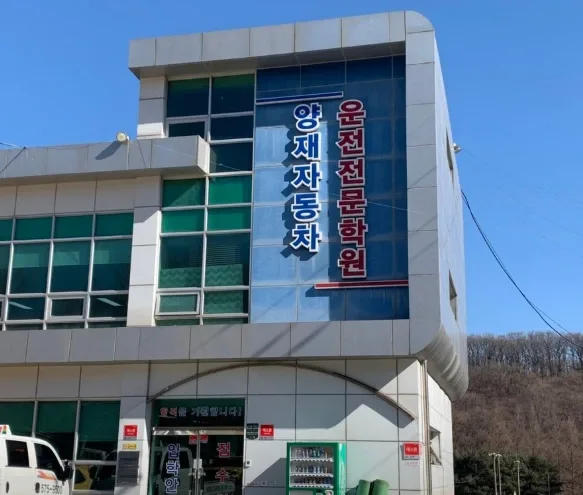
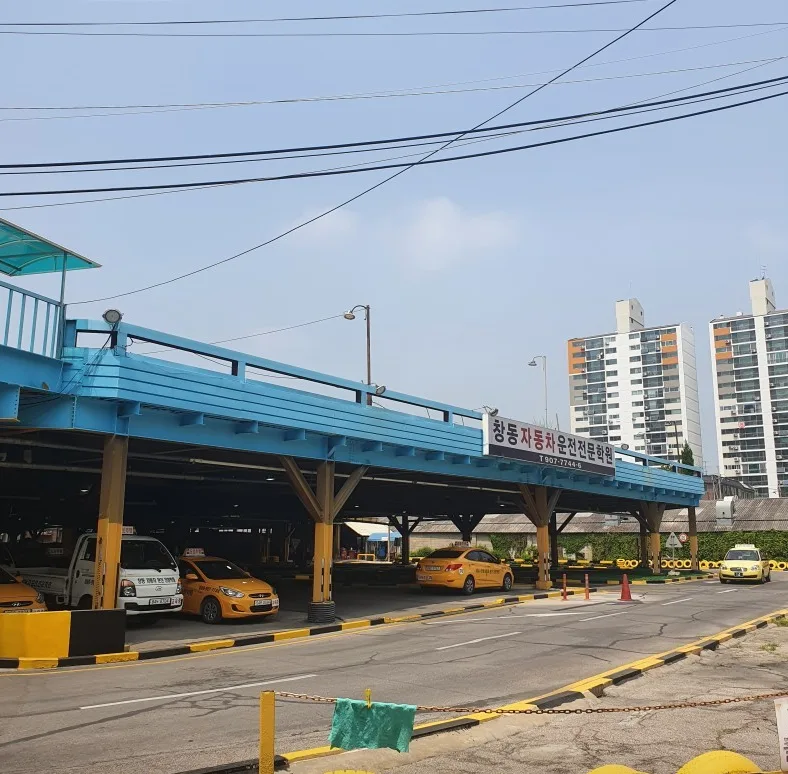
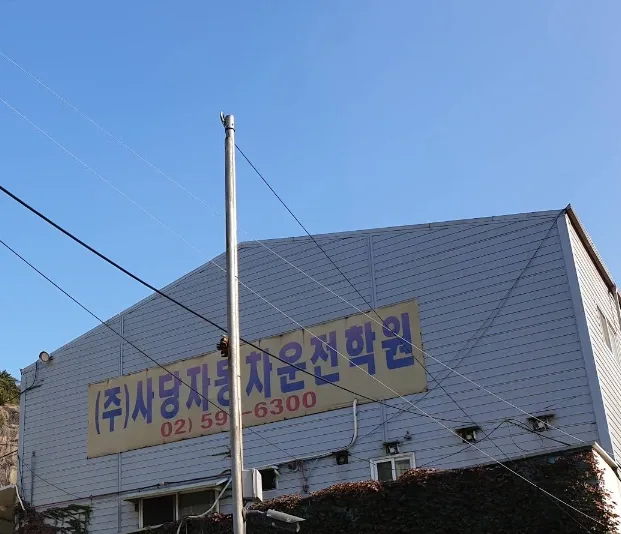
The Sadang Driving School building and interior were clearly old and showed signs of long-term use. The waiting area was suitable for sitting briefly before and after lessons, although it became crowded when many students arrived at the same time. There was also some waiting time while test vehicles were assigned.
Heating and air conditioning did not cause any discomfort during my visits. Indoor noise was mostly limited to announcements and normal conversations between students. Anyone expecting a recently renovated or modern driving school may be disappointed, but the facilities were adequate for registration, waiting, classroom education, and test preparation.
Sadang Driving School Training Vehicles
Driver’s Seat and Vehicle Condition
The vehicles I used at Sadang Driving School showed normal wear on the driver’s seat and passenger seat, but they were not heavily stained or dirty. After adjusting the seat distance, seat height, and side mirrors, I had a clear view of the road and lane markings. The driver’s seat did not feel excessively narrow.
The steering wheel was manageable for a beginner. The brake required careful pressure because pressing it too firmly caused the vehicle to stop abruptly. The accelerator and brake pedal positions did not take long to get used to, but my first instructor started the lesson without giving enough explanation about pedal control. A later instructor carefully explained how to start, stop, and return the steering wheel after turning, which made the same vehicle much easier to handle.
Cleanliness, Ventilation, and Climate Control
There was no strong odor inside the training vehicles, and the vehicle noise did not interfere with the lessons. Air conditioning was used during warmer sessions, and the windows could be opened when ventilation was needed.
The amount of wear differed slightly between vehicles, but the cars I used were suitable for closed-course and road training. I recommend checking the seat position, mirrors, pedals, steering wheel, and brake response before leaving. Any unusual noise or brake response should be reported to the instructor immediately.
Sadang Driving School Closed-Course Training
Perpendicular Parking and Basic Controls
I completed four hours of closed-course training in two two-hour sessions. During my first lesson, the instructor moved quickly even though I had never driven before. The instructor’s tone became harsh when I made mistakes, and the explanation of perpendicular parking did not include clear reference points.
A different instructor later explained the vehicle position, steering timing, and exit direction step by step. That lesson was much easier to understand. The school had two closed-course test routes. Route 2 required extra attention because I had to turn right immediately after leaving the parking section and then make another left turn.
Because the explanations can differ depending on the instructor, I recommend requesting an instructor whose teaching method works well for you.
Closed-Course Test Waiting Time and Result
On the test day, I waited for my turn and received a vehicle assignment. The waiting time was not especially short, but the test staff clearly explained where to wait and when to move.
I passed the closed-course test on my first attempt. The four hours of training did not feel generous, so reviewing the parking steps, starting procedure, and required checks between lessons was helpful.
Sadang Driving School Road Training
Course Difficulty and Lesson Time
I completed six hours of road training in three two-hour sessions. The roads around Sadang Station had many buses and passenger vehicles, and other drivers often did not yield during lane changes. It was not an easy place for a beginner’s first road lesson.
When traffic congestion was severe, it was difficult to complete the planned route within two hours. Among routes A, B, C, and D, I found Route C the most challenging. The downhill section toward Bangbae Station and the left turn near the Gyeongnam Apartment intersection required careful lane selection.
Memorizing the directions alone was not enough. I also had to practice checking the mirrors, using the turn signal, choosing the right time to change lanes, controlling speed, and starting again after stopping.
Instructor Methods and Lesson Satisfaction
The quality of the road lessons depended heavily on the assigned instructor. The instructor I liked most identified the lane changes and parking steps I struggled with, asked why I had made each mistake, and allowed me to repeat the same section.
Another instructor told me to watch YouTube when I asked a question during the remaining lesson time and did not provide a proper explanation. Advice about speed and lane-change timing also differed depending on the instructor. I experienced informal language, sighing, and irritated responses during some lessons. There were also cases where an instructor appeared drowsy or took control of the steering wheel without giving enough explanation.
I recommend taking one lesson first and then asking the reception desk to assign an instructor whose teaching method suits you.
Road Test and Retake
I failed my first road test after losing points for congestion-related delays, the initial departure, and lane selection near Sadang Station. I took one additional hour of road training and passed on my second attempt.
During the test, I saw the examiner answer another candidate’s questions and give directions in advance several times. The amount of guidance did not feel consistent between candidates, which made me question the fairness of the test.
It is safer to learn the routes, lane positions, and scoring rules thoroughly rather than expecting additional guidance from the examiner during the test.
Sadang Driving School Staff and Instructors
Reception and Test Staff
Most reception staff members clearly explained the identification check, registration process, lesson times, and test booking procedure. I had many questions during registration, and the staff member who checked the available dates was helpful.
However, another staff member responded coldly when I asked about changing my schedule and booking additional training after failing the road test. The test staff properly explained the waiting area and testing order, but the service was not consistently friendly during every interaction.
Instructor Attitude and Teaching Differences
The better instructors explained the controls before departure, helped me feel less nervous, and allowed me to repeat difficult sections after making mistakes. Those lessons made good use of the two-hour sessions.
Other instructors raised their voices when I did not understand something immediately or dismissed my questions without giving a detailed answer. With a capable instructor, Sadang Driving School offers valuable practice for driving on busy Seoul roads. With an unsuitable instructor, an expensive lesson can feel wasted. The assigned instructor had the greatest effect on my overall satisfaction.
Sadang Driving School Advantages and Disadvantages
Advantages and Overall Satisfaction
The biggest advantage of Sadang Driving School was its location within walking distance of Sadang Station. I did not need to wait for a shuttle bus, and I could complete the classroom course, closed-course lessons, road training, and tests at the same place.
Practicing lane changes, traffic-light stops, and driving between buses and passenger vehicles in heavy traffic was helpful when I later drove in Seoul. When I was assigned a good instructor, I received clear explanations about perpendicular parking and the areas I needed to improve. The registration consultation was also generally detailed.
Disadvantages and Willingness to Return
The main disadvantages were the inconsistent attitudes of the staff and instructors, the old facilities, and the high tuition. The basic payment was KRW 890,000, and the total increased quickly after additional training and a retest.
Popular lesson and test times could be delayed, and the limited ability to make new appointments by phone was inconvenient. I was also dissatisfied with the inconsistent amount of guidance given to different candidates during the road test.
I would consider using Sadang Driving School again if I needed to complete the licensing process near Sadang. However, anyone who places a high priority on consistently friendly service and flexible scheduling should compare several driving schools before registering. My overall rating was about three out of five.
Sadang Driving School Location and Transportation
Walking from Sadang Station and Parking
From Exit 2 of Sadang Station, I walked south along the main road toward Gwacheon. After passing the Hyundai Oilbank gas station, I continued toward the Sadang Interchange and the Homeplus sign.
Sadang Driving School was about a five-minute walk from the station, making it convenient to reach by subway or bus. I did not use a shuttle because it was not necessary. I traveled by public transportation, so I did not personally use the school’s parking area.
Traffic around Sadang Interchange and Gwacheon-daero can become heavy depending on the time of day. Anyone arriving by car should leave extra time before the lesson begins.