A Korean Class 2 Ordinary license holder who has remained accident-free for at least seven years may be able to obtain a Class 1 Ordinary license without retaking the knowledge, skills, and road tests. The route is not automatic. The applicant must satisfy the official accident-free check, pass the applicable fitness review, and submit the required documents at a driver’s license examination office.
A major rule took effect on March 19, 2026: seven accident-free years alone are no longer enough. The applicant must also prove that they actually drove a motor vehicle during the seven-year period. An insurance certificate, proof of personal vehicle ownership, company-vehicle records, qualifying rental-car records, or another accepted record may establish this experience. Merely keeping an unused license for seven years does not meet the new purpose of the route.
- The applicant must hold a Class 2 Ordinary license and be officially eligible based on at least seven accident-free years counted back from the application date.
- For applications from March 19, 2026, a record proving actual driving during that seven-year period is required.
- KOROAD lists driver’s license examination offices nationwide as the application locations; this is not described as an instant online or police-station conversion.
- A Class 2 Ordinary license restricted to automatic transmission converts through this route to a Class 1 Ordinary license with the automatic restriction, not unrestricted manual-transmission authority.
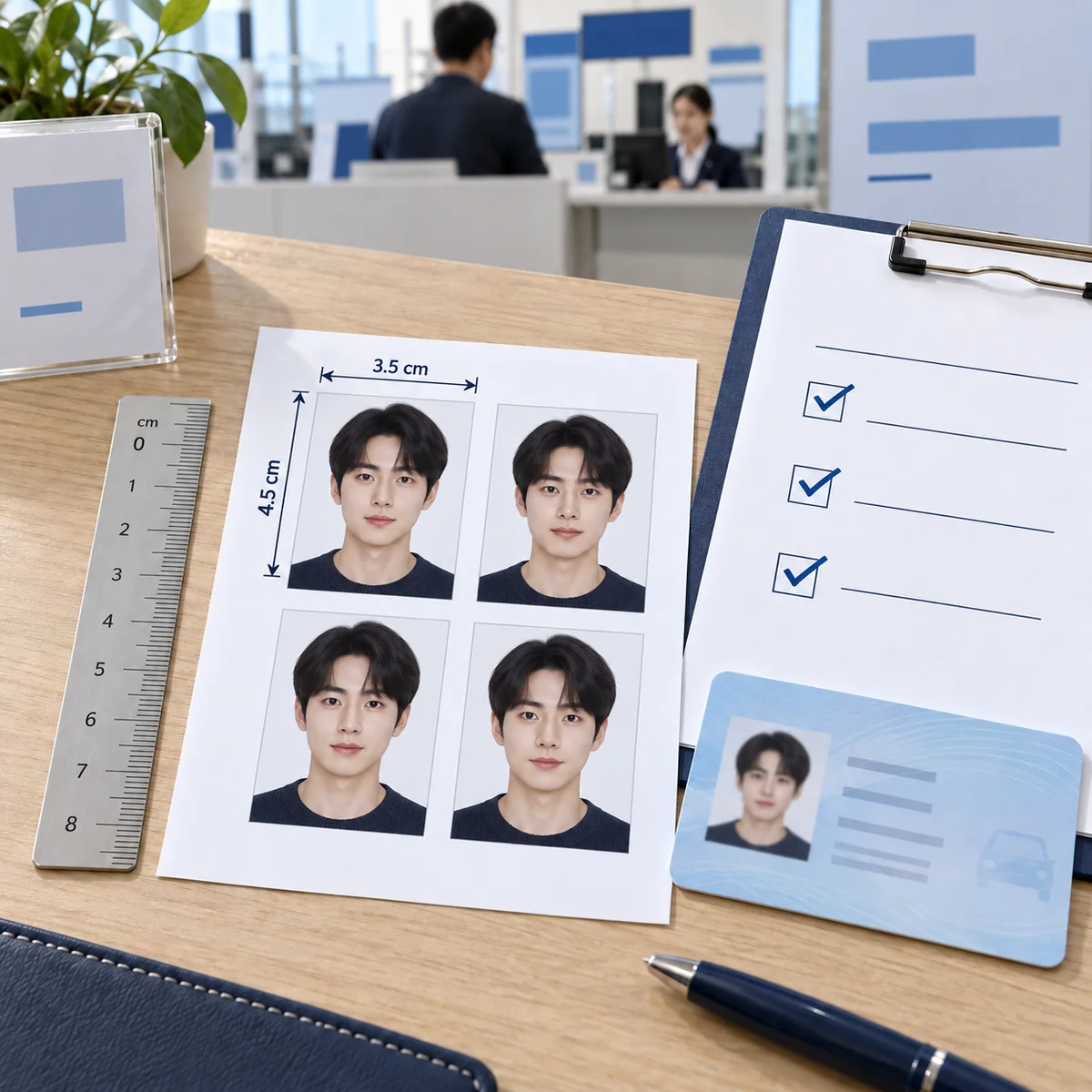
- Prepare the current license, three 3.5 by 4.5 cm color photographs, driving-experience evidence, the issuance fee, and the fitness-examination documents.
Who should use this guide?
This guide is for a long-term Class 2 Ordinary license holder who has actually driven a personal car or company vehicle, appeared on an auto-insurance policy, rented cars, completed qualifying on-road refresher training, or otherwise needs to assemble acceptable proof of real driving.
If you first need to understand the license classes, read the guide to Korean driver’s license categories. To compare the vehicles covered before and after conversion, see the vehicle-by-license-class guide.
What changed on March 19, 2026?
Under the earlier explanation of the route, a Class 2 Ordinary holder who reached seven accident-free years could obtain Class 1 Ordinary after the required fitness examination. That allowed people who had simply retained an unused license to qualify alongside active drivers.
KOROAD’s current seven-year accident-free page cites item 13 of Annex 3 to the Enforcement Decree of the Road Traffic Act. It says that applications from March 19, 2026 require evidence that the person had actual driving experience during the seven-year period. Accident-free eligibility and proof of actual driving are therefore two separate checks.
Does an automatic Class 2 license become an unrestricted manual Class 1 license?
No. The Korean National Police Agency explains that the Class 1 Ordinary automatic-transmission license was introduced on October 20, 2024. A holder of a Class 2 Ordinary automatic license who satisfies the seven-year accident-free and experience requirements may move to Class 1 Ordinary with an automatic-transmission restriction. The person may drive qualifying Class 1 Ordinary vehicles only when they have an automatic transmission.
Check the restriction printed or encoded on your current license and identify why you need the higher class. If you need authority for manual-transmission vehicles, do not assume this administrative route removes the existing automatic restriction. Ask an examination office about the separate requirements.
How to check accident-free eligibility
Do not decide eligibility solely from your memory of having no minor collisions. Police Civil Service 24 provides a seven-year accident-free inquiry for the applicant after login, using details such as name and license number. Its service guide describes the inquiry as immediate, with no supporting document or fee for the online lookup.
Some eFINE help text still describes the displayed inquiry in terms of a Class 2 Ordinary manual license, while the later National Police Agency guidance also covers the automatic-restricted route. If your current automatic restriction or the online result makes the case unclear, confirm with the examination office rather than treating an old help-screen description as a final refusal.
Accepted categories of driving-experience evidence
KOROAD’s detailed evidence table lists the following categories. The decisive practical point is that the record must include identifying information, such as the applicant’s name and date of birth, so that staff can connect the document to the applicant.
- Auto-insurance enrollment certificates, insurance claim confirmations, or compensation records
- Employment certificates showing work as a passenger or freight-transport driver, including military vehicle-driving experience
- Company-vehicle registration, employment, and dispatch or vehicle-operation records
- Business-owner vehicle registration and employment documents
- Vehicle registration or registry records proving sole or joint ownership by the applicant
- Traffic-enforcement records that identify the applicant as the actual driver through a fine or similar disposition
- At least ten hours of on-road refresher instruction at an automobile driving academy
- Contracts or usage statements for rental-business vehicles
- Photographs or video that prove driving to a level comparable with other accepted evidence
Motorcycle experience is excluded; the published standard is limited to motor-vehicle experience other than two-wheeled vehicles. An ordinary souvenir photograph beside a car should not be assumed to meet the high standard for photographic or video evidence.
How to prepare insurance evidence
An auto-insurance enrollment certificate that clearly identifies the applicant as an insured driver is one of the most straightforward records. A broad policy such as “any driver” or a family-limited endorsement can be more complicated when the applicant’s personal details do not appear on the certificate. KOROAD then calls for the insurance document showing the permitted driver range and an additional family-relationship certificate.
Even when the permitted range says “any driver,” the current KOROAD table says a non-family third party is not recognized through that wording alone. If you drove a relative’s car, check whether the insurer can issue a record naming you and ask the examination office exactly which family proof it expects.
If an insurer recorded your personal information after a traffic incident while you were driving, a claim confirmation or compensation record bearing your identifying details may also be evidence of driving. This does not itself decide accident-free eligibility; the official inquiry and the experience-document review remain distinct.
Personal and company vehicles
If you owned a car alone or jointly, a vehicle registration certificate or vehicle registry record may prove the ownership connection. KOROAD’s date rule makes a special exception for vehicle registration: ownership confirmation may be used regardless of the document’s issue date.
For a corporate vehicle, prepare all of the following: registration showing that corporation as the owner, an employment certificate, and operation records such as dispatch logs, a vehicle operation book, or a fleet-management ledger. For an individual business owner’s vehicle, the table calls for both the owner’s vehicle registration and the employee’s employment certificate. The name of the registered owner and the issuer of the employment certificate must match.
Rental cars, refresher lessons, and overseas experience
For a rental-business vehicle, a contract or usage statement must connect the rental and driving to the applicant. KOROAD says short rentals qualify only when combined use totals at least 72 hours, or three days. The same standard is stated for vehicles rented and driven overseas.
On-road refresher instruction at an automobile driving academy or a specialized driving academy may qualify when the applicant completed at least ten hours. Ask the academy for a record showing the student’s identity, the hours, and the nature of the road instruction. Informal practice in a friend’s car should not automatically be treated as the same evidence.
An overseas transport-employment certificate may also be considered, but KOROAD’s public table does not spell out translation and authentication requirements. Before visiting, ask the selected examination office whether it requires a Korean translation, certification, or the original record.
Which dates must appear on the evidence?
Except for the vehicle-registration exception, a period or date shown on the evidence must fall within the seven years counted backward from the application date. When the document does not state a period, KOROAD uses its issue date. For example, an application made on September 20, 2026 would generally require the relevant period or date to fall on or after September 20, 2019.
This is not published as a requirement to prove continuous driving on every day of all seven years. It is a requirement to prove actual driving during the seven-year period, subject to the specific minimums for evidence such as 72 hours of short-term rentals and ten hours of academy road training.
Application sequence at the examination office
- Check the seven-year accident-free result through the official police service or with the examination office.
- Select evidence matching how you actually drove and verify that it displays your identity, date, and other required details.
- Ask the intended examination office whether that document combination is sufficient and whether its in-house physical examination room is operating.
- Pack the current license, three photographs, driving-experience evidence, the fee, and any health-examination substitute.
- At the licensing counter, complete the accident-free, actual-driving, restriction, and fitness checks.
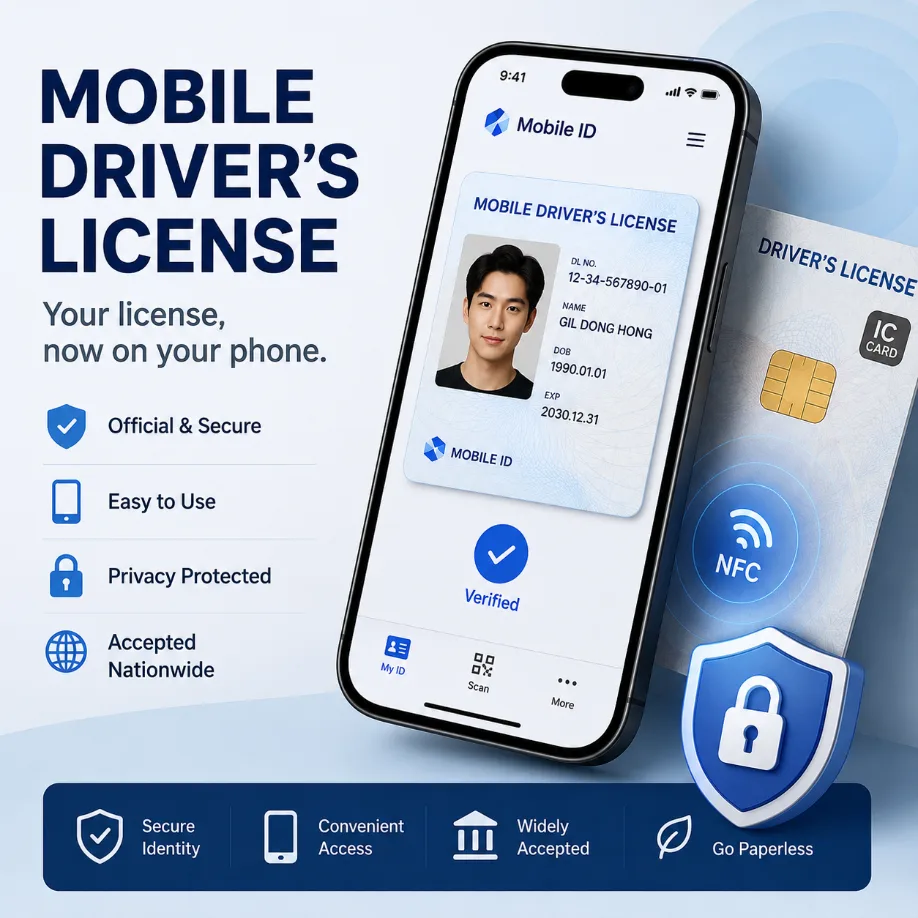
- After approval, choose the ordinary card or mobile-IC card format and complete issuance.
KOROAD lists driver’s license examination offices nationwide as the location for this service. Do not confuse it with an ordinary Class 2 renewal at a police station. A visit-time reservation also does not itself approve the conversion, so allow time for document review.
Photographs, fees, and the fitness examination
- Current license: Bring the Class 2 Ordinary license you now hold.
- Photographs: Bring three passport-style 3.5 by 4.5 cm color photographs taken within the previous six months.
- Issuance fee: KOROAD currently lists KRW 10,000 for an ordinary Korean or bilingual card and KRW 15,000 for a mobile-IC Korean or bilingual card.
- Fitness fee: This is separate, and an outside hospital charges its own medical rate.
When a qualifying National Health Insurance, Medical Aid, or military physical-examination result from the preceding two years is available and meets the relevant vision and hearing standard, staff may be able to use it through consent to administrative-data sharing instead of a separate examination. A one-eyed Class 1 Ordinary applicant is subject to additional field-of-vision requirements and must submit an ophthalmologist’s diagnosis.
KOROAD currently says that the Mungyeong, Gangneung, Taebaek, Gwangyang, Chungju, and Chuncheon examination offices do not have an in-house physical examination room. Visitors to those offices should arrange an outside examination or confirm use of a qualifying health record. See the driver’s license photo and copy-count guide before visiting.
Can a representative apply?
KOROAD publishes a representative-application list for a principal who has already passed the physical examination. It includes the passed application form bearing two recent photographs, the original driver’s license, one additional photograph, the fee, the principal’s power of attorney, and the representative’s identification.
The new license can be collected only by the license holder. The handling of actual-driving evidence may also depend on the document type, so the representative should not visit with only a power of attorney. Confirm the entire evidence package with the examination office first.
Common preparation mistakes
- Assuming seven accident-free years removes the 2026 proof-of-driving requirement.
- Using an insurance certificate that does not identify the applicant by name and date of birth.
- Assuming “any driver” automatically proves driving by an unrelated third party.
- Bringing only one of the required registration, employment, and operation documents for a company car.
- Falling short of the combined 72-hour minimum for short rental-car use.
- Submitting academy records with fewer than ten road-training hours or no hour total.
- Using evidence whose date falls outside the seven-year lookback window.
- Assuming an automatic-restricted Class 2 license becomes an unrestricted manual Class 1 license.
- Going to a police station instead of a driver’s license examination office.
- Visiting an office without an examination room and without a health-record substitute.
Final checklist
- I confirmed that my current license is Class 2 Ordinary and checked any automatic-transmission restriction.
- I checked my seven-year accident-free eligibility through an official channel.
- I selected a record that proves actual motor-vehicle driving during the relevant seven-year period.
- The evidence shows identifying information such as my name and date of birth.
- The evidence date or period falls within the seven-year lookback, unless the vehicle-registration exception applies.
- I checked the extra documents for a family car, company car, or rental vehicle.
- I packed my current license and three recent 3.5 by 4.5 cm color photographs.
- I confirmed the fitness examination or use of a qualifying health result from the preceding two years.
- I asked the office about my evidence combination and its operating hours.
- I prepared the card fee and any separate fitness-examination charge.
Frequently asked questions
Must I prove that I drove continuously for all seven years?
KOROAD describes proof that the applicant had actual driving experience during the seven-year period, not proof of driving every day for seven years. Specific evidence types still have their own minimums, including 72 combined hours for short rentals and ten hours for academy road instruction.
Can my own vehicle registration certificate be enough?
KOROAD lists a registration certificate or registry record proving sole or joint ownership as an accepted category. It must clearly connect the applicant to the vehicle.
Does “any driver” insurance for a relative’s car prove my experience?
When the applicant is not named, KOROAD requires the document showing the permitted range and additional proof of family relationship. It states that an unrelated third party is not recognized through the “any driver” range alone.
Does a one-day rental qualify?
No. Short rentals qualify only when combined use totals at least 72 hours, or three days.
Can an automatic Class 2 license convert to a manual Class 1 license?
The police guidance describes this route as conversion from Class 2 Ordinary automatic to Class 1 Ordinary automatic. Ask the examination office about separate requirements if you need manual-transmission authority.
Can I apply at a police station?
KOROAD lists driver’s license examination offices nationwide as the application locations for the seven-year accident-free route. Do not treat it as an ordinary Class 2 renewal handled at a police station.
Continue with a related guideOfficial references
- KOROAD seven-year accident-free eligibility, documents, and driving-experience table
- National Police Agency notice on the March 19, 2026 actual-driving requirement
- National Police Agency guide to Class 1 Ordinary automatic and the Class 2 automatic route
- National Law Information Center: Annex 3 to the Road Traffic Act Enforcement Decree
- Police Civil Service 24 seven-year accident-free inquiry guide
- eFINE instructions for the seven-year accident-free inquiry
- KOROAD physical examination locations, health-record use, and fees
Written and last reviewed: September 20, 2026. Accepted evidence, fees, examination-room operations, and review procedures can change. Reopen KOROAD’s “Driving Experience Evidence and Verification Standard” on the visit date and confirm any unusual document with the office.
This is independently edited guidance based on public material from KOROAD, the Korean National Police Agency, and the National Law Information Center. The site does not represent those authorities and does not guarantee acceptance of a particular document or same-day issuance.