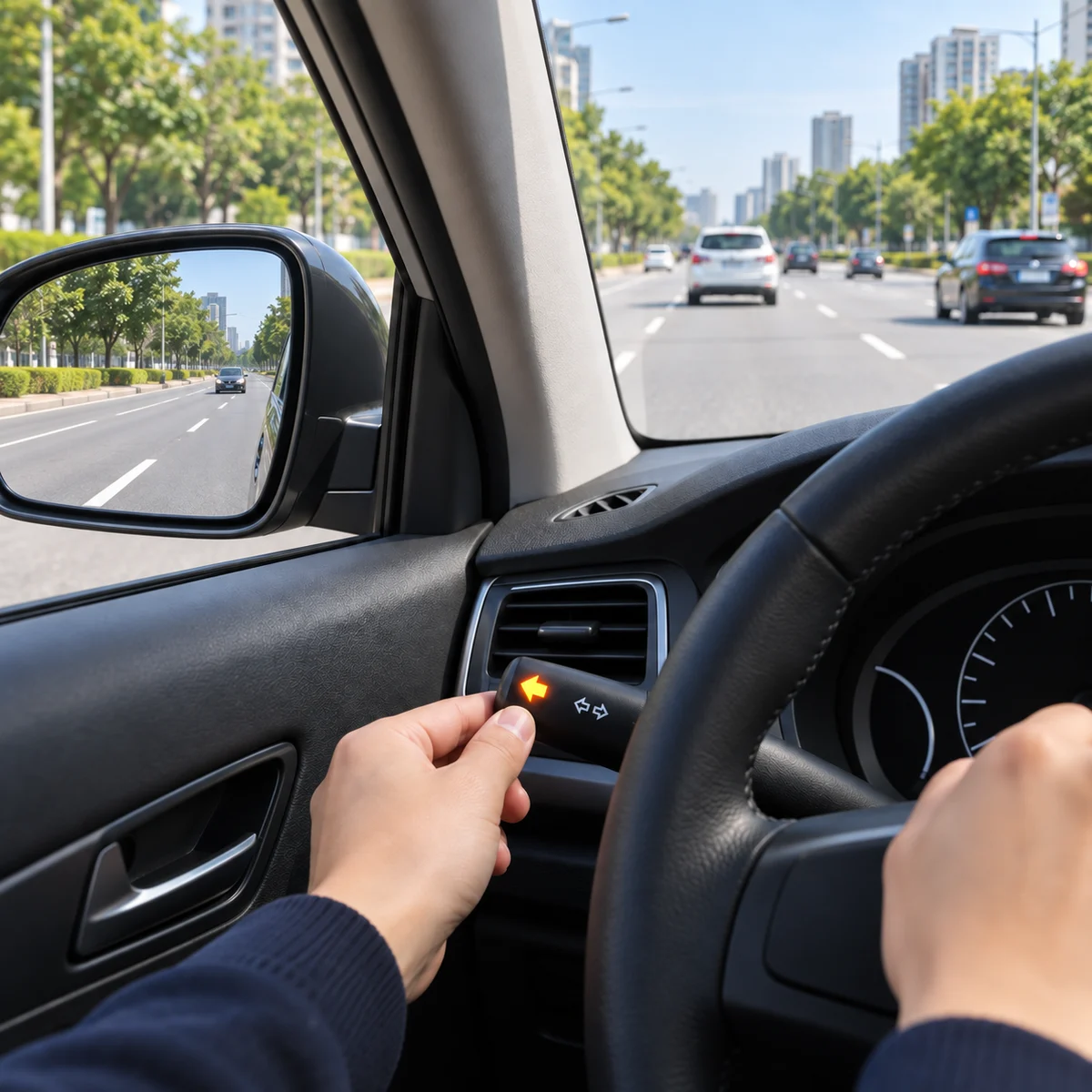
A lane change in Korea's on-road driving test is not simply a matter of turning on the indicator and moving sideways. The examiner assesses a complete process: reading the route, observing traffic, signaling, judging a safe gap, moving smoothly and canceling the signal. A rushed attempt to recover a missed navigation cue can create several deductions at once.
Who this guide is for
- Applicants preparing for the Class 1 or Class 2 ordinary-license road test
- Drivers unsure when to signal after hearing a navigation prompt such as “turn in 300 or 500 meters”
- Applicants practicing a consistent mirror and blind-spot routine
- Anyone worried about missing the intended lane or turn during the test
Each test center has different routes and live traffic conditions. This guide explains the common legal and scoring principles rather than a memorized route for one location.
How the road test is scored
According to the Korea Road Traffic Authority, the Class 1 and Class 2 ordinary-license road test starts from 100 points and requires at least 70 to pass. One of four routes, each at least 5 km long, is selected, voice navigation is provided, and 57 safety-related items are assessed.
Do not focus only on small deductions. The test may be stopped for conduct such as causing an accident or a clearly dangerous situation, disobeying a traffic signal or safety instruction, failing to protect pedestrians, exceeding a protection-zone limit, or refusing an examiner's traffic-safety direction. That is why an unsafe attempt to rescue a missed turn is worse than remaining stable and legal.
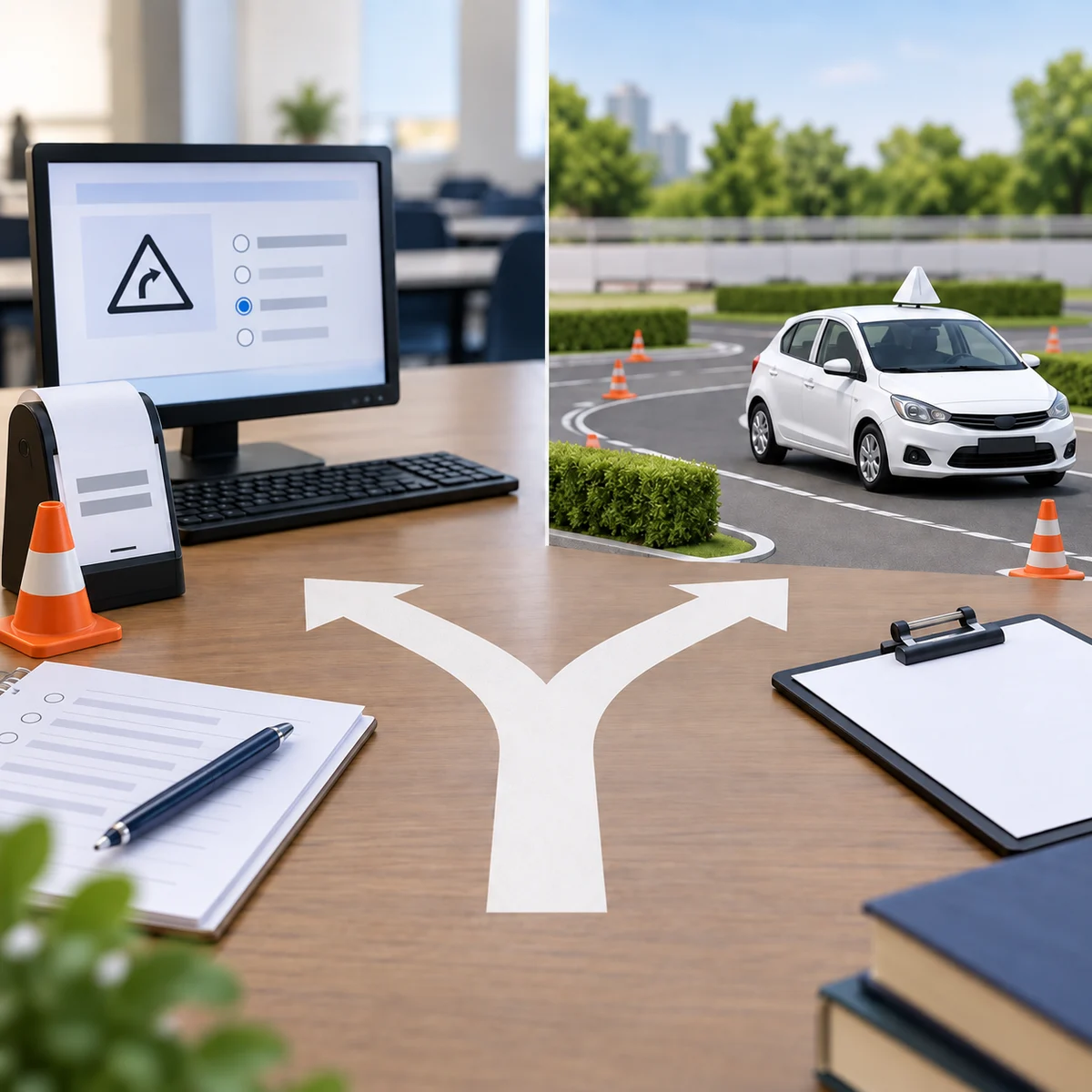
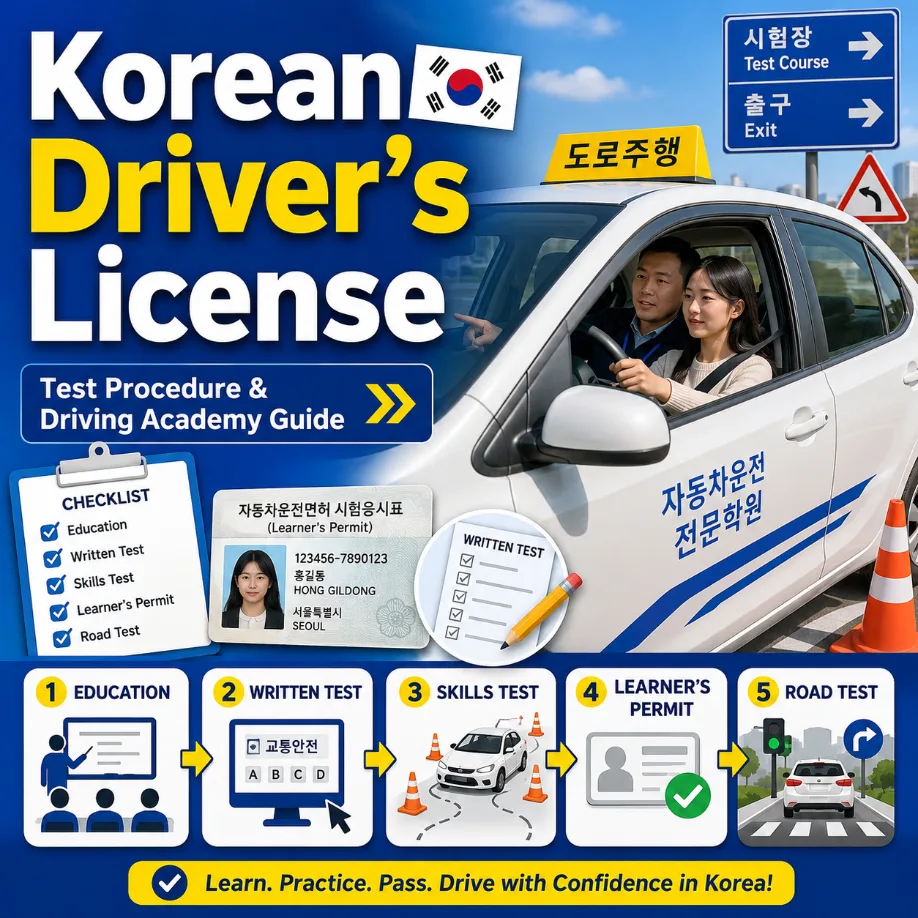
Review the complete Korean license-test sequence before test day.
Four deductions directly linked to lane changes
Article 68 of the current Enforcement Rule places the detailed road-test items and scoring criteria in Appendix 26. Four entries matter most for a lane change.
1. Failure to check safety: 10-point deduction
This applies when an applicant changes direction or turns without checking other traffic. Using the indicator does not replace observation; moving immediately after signaling without checking mirrors and the surrounding space can trigger a separate and larger deduction.
2. Incorrect or missing lane-change signal: 5-point deduction
This category is broader than never using the signal. The official criteria include failing to signal from at least 30 m before the maneuver, stopping the signal before the change is complete, and leaving it on after completion.
3. Prohibited or excessive lane change: 5-point deduction
This covers careless, excessive changes and changing where the road marking or location prohibits it. Check lane lines, signs and the approaching intersection before acting.
4. Obstructing surrounding vehicles: 5-point deduction
This applies when a change is likely to make a vehicle behind alter speed or direction abruptly, or when poor timing interferes with following traffic. A gap must be large enough for the other driver to continue normally, not merely large enough for your car to fit.
The official scoring notes allow repeated deductions when the criteria are met. One rushed movement can therefore involve poor observation, incorrect signaling and interference with another vehicle.
Exactly when should the indicator start?
Article 38 of the Road Traffic Act requires a driver changing course or turning to signal until the maneuver is complete. Article 21 and Appendix 2 of the Enforcement Decree require the signal from at least 30 m before the action on an ordinary road, or 100 m on an expressway.
Do not confuse a navigation prompt such as “turn in 500 m” with the 30-meter signaling rule. The earlier prompt is time to identify the required lane and read traffic. It does not mean leaving the indicator on for the entire 500 m. Signal sufficiently before the lane change you actually plan, allow other drivers to recognize your intention and move only when the gap is safe.
Four common indicator mistakes
- The car begins moving before the late signal is activated.
- The signal flashes only once or twice and is canceled before crossing the lane line.
- The stalk self-cancels before the vehicle is fully established in the new lane.
- The driver assumes it canceled and continues with the signal still on.
Practice the indicator as a three-part check: early enough, maintained through completion, and actually off afterward.
A repeatable observation sequence
The legal standard is real observation of surrounding traffic, not a theatrical head movement. The following routine helps prevent omissions.
- Read ahead: check the signal, queue, crosswalk and upcoming turn.
- Interior mirror: understand the overall traffic flow behind you and notice fast-approaching vehicles.
- Side mirror: locate vehicles and estimate space in the target lane.
- Signal: communicate your intention early enough.
- Blind-spot recheck: briefly verify that no car, motorcycle or bicycle is hidden beside you.
- Move smoothly: cross the lane line without abrupt acceleration or braking and settle near the center of the new lane.
- Cancel check: after the vehicle is fully established, verify that the indicator is off.
Do not stare into a mirror long enough to lose the road ahead. Short, repeated observations plus a clear final blind-spot check are safer.
What to do after a “turn in 500 m” prompt
First determine your current lane, how many lane changes would be needed and whether a solid line, intersection or other restricted area is approaching.
- Read the lane markings and traffic ahead.
- Count the necessary changes but do not cut across several lanes at once.
- Repeat observation and signaling for each separate lane change.
- If the intersection is too close and no safe gap exists, do not force the maneuver.
- Continue legally in the current lane and listen for the next navigation or examiner direction.
The test assesses safe decisions in live traffic, not just memory of the course.
If you miss the lane or turn
Do not snap the steering wheel, brake abruptly or cross a solid line to reach the intended lane. The official criteria separately assess observation, signaling, prohibited changes and interference with surrounding traffic. The Authority also requires applicants to follow an examiner's directions related to safety and orderly test progress.
Safe response order
- Do not force a gap or make an abrupt stop.
- Hold the current lane and prioritize signals, stop lines, pedestrians and the vehicle ahead.
- Listen for recalculated navigation guidance.
- Follow the examiner's route direction within the law and current traffic conditions.
- At the next lawful opportunity, restart from observation rather than rushing.
Do not assume that a missed turn by itself determines the result. Handling can depend on the road situation and examiner direction. An illegal or dangerous attempt to recover the route, however, can create deductions or a reason to stop the test.
Common scenarios
A small gap appears in slow traffic
Ask whether the following vehicle can continue without sharp braking, not only whether your car physically fits. If the gap is inadequate, keep the signal and wait rather than pushing in.
You must turn soon after changing lanes
Treat the lane change and the turn as separate communications. Complete and stabilize the first movement, then recheck traffic and signal for the turn at the proper point. Do not cross multiple lanes at once because time feels short.
The indicator cancels by itself
If it cancels before the lane change is complete, reactivate it and maintain the signal through completion. Briefly verify the dashboard indicator and sound instead of relying on the mechanism.
A following driver closes the gap
Do not enter anyway. Let that vehicle pass, find a new gap or continue safely until another lawful change point appears.
Pre-test practice checklist
- Check the test center's latest official routes and any construction or lane changes.
- Adjust the interior and side mirrors to your view before starting.
- Repeat the same forward, rear, side and blind-spot observations for every change.
- Practice the ordinary-road sequence: signal from at least 30 m before, maintain it, then cancel after completion.
- When moving more than one lane, stabilize in each lane and reassess.
- Practice holding the lane calmly after a deliberately missed navigation cue.
- Finish changes before intersections, crosswalks and solid-line areas.
- If an examiner's instruction is unclear, remain safe and ask for clarification instead of guessing.
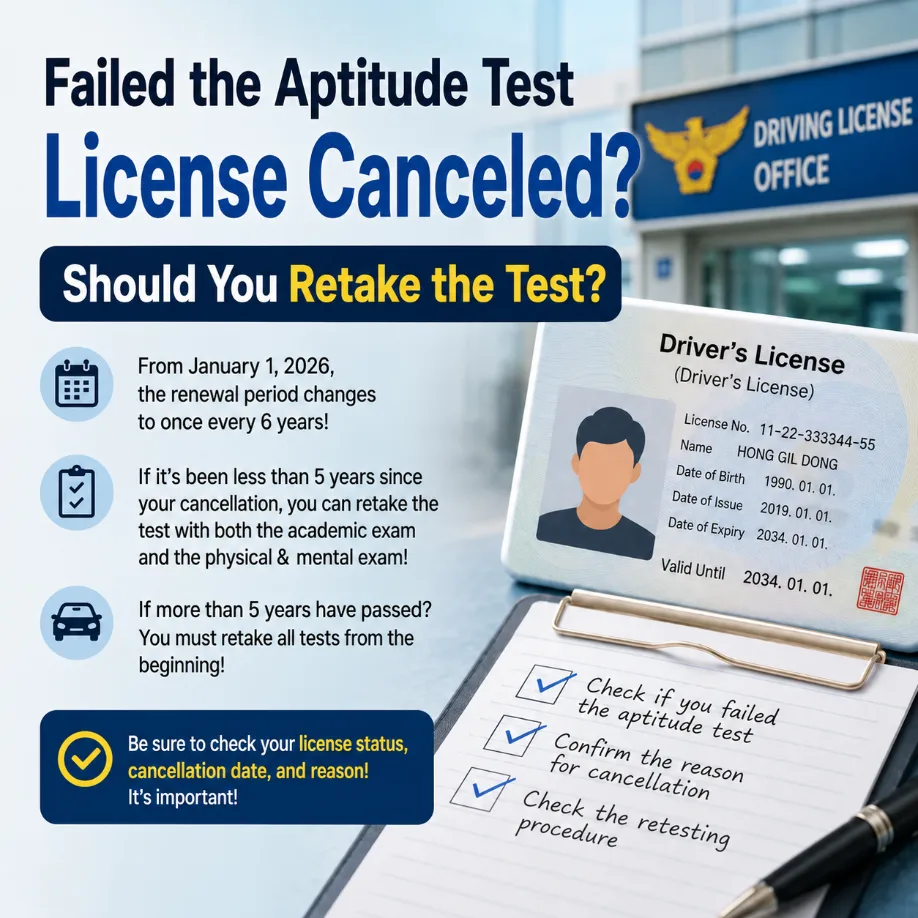
- Know the retest date and learner-permit expiration date if you do not pass.
See the guide to test-result validity and retest timing. For closed-course controls, use the practice simulation.
Frequently asked questions
Should I signal immediately when navigation says “turn in 500 m”?
The prompt is time to prepare by reading lanes and traffic. The ordinary-road rule is tied to the actual maneuver: signal from at least 30 m before each lane change or turn, adjusted to the real road and traffic situation.
Can I cross two lanes in one movement?
Crossing several lanes at once makes it difficult to reassess vehicles and blind spots in each lane and can obstruct other traffic. Complete one lane change, stabilize the vehicle, then repeat observation and signaling.
Does correct signaling prevent an observation deduction?
No. Observation and signaling are separate scoring items. You can be penalized for failing to check traffic even when the indicator is active.
Is missing a turn an automatic failure?
Do not predict the result from that fact alone. Hold a safe, lawful course and follow navigation and examiner directions. Trying to recover through a signal violation, abrupt lane change or prohibited area creates a more serious problem.
When should I cancel the indicator?
Maintain it until the vehicle is fully in the new lane and the maneuver is complete, then cancel it. Both early cancellation and leaving it on are included in the official deduction criteria.
Official sources
- Korea Road Traffic Authority: on-road driving test
- Korea Road Traffic Authority: road-test guidance video
- Enforcement Rule, Article 68: scoring and passing standard
- Enforcement Rule, Appendix 26: road-test scoring table
- Road Traffic Act, Article 38: vehicle signals
- Enforcement Decree, Article 21
- Enforcement Decree, Appendix 2: timing and method of signals
Written and last reviewed: September 13, 2026. Routes, construction, appointment schedules and guidance can vary by test center and date. Check the Korea Road Traffic Authority and the relevant test center before your appointment. This is an independent information site and is not an agent of the Authority, the police or a driving academy, and it does not guarantee a test result.